
A natural hairline is one of the most powerful finishing touches in drag. When the lace disappears and the hairline looks like it's growing from your scalp, the entire look elevates — it reads more polished, more professional, and more convincing under any lighting. Here's exactly how to achieve it.
For the complete foundation guide to human hair wigs, start here: The Ultimate Guide to Human Hair Wigs for Drag Queens
Start with the Right Lace
The foundation of a natural hairline is the lace itself. HD lace — ultra-thin, transparent lace that virtually disappears against the skin — is the gold standard for an undetectable hairline. Unlike traditional brown or beige lace, HD lace doesn't require tinting to match your skin tone and melts into the skin with minimal product. If a natural hairline is a priority for your drag, HD lace is worth the investment.
Transparent lace is a step below HD but still significantly better than standard lace for achieving a natural finish. For a full comparison of lace types, read: Lace Front vs HD Lace for Drag: Which Looks Better Under Stage Lights?
Prep Your Skin
Clean, oil-free skin is essential for lace adhesion and a seamless finish. Before installation, wipe your hairline with isopropyl alcohol to remove any oils, moisturizer, or makeup residue. This step is often skipped and it's one of the main reasons lace lifts or looks unnatural — adhesive doesn't bond well to oily skin, and the lace sits on top of the skin rather than melting into it.
If you're using a wig grip band instead of adhesive, the same principle applies. For glueless installation options, read: How to Secure a Drag Wig Without Glue
Melt the Lace
Melting the lace means getting it to lie completely flat against your skin with no visible edge or lift. Apply your adhesive — got2b spray, wig glue, or lace tape — along the hairline and press the lace down firmly. Use a rat tail comb or your fingertips to press the lace into the skin, working from the center outward. A scarf or headband wrapped tightly around the hairline for five to ten minutes while the adhesive sets helps the lace bond completely flat.
Once the adhesive is set, use a small amount of foundation or concealer that matches your skin tone to blend the lace edge into your skin. Apply with a damp beauty sponge using a pressing motion — not a rubbing motion, which can lift the lace. Set with a translucent powder to prevent transfer.
Style the Baby Hairs
Baby hairs are the finishing detail that makes a hairline look truly natural. Most lace front wigs have a small amount of hair along the hairline that can be styled into baby hairs. Use a small amount of edge control and a soft bristle brush or toothbrush to lay and shape them. Keep them subtle — a few small wisps that follow the natural growth pattern of a hairline.
For queens who want more defined baby hairs, a fine-tooth comb and a light-hold gel give you more control over the shape. Set with a light mist of hairspray and press with a scarf for a minute to lock the style in place.
Under Stage Lighting
Stage lighting is more forgiving than natural light for hairlines — the intensity of the light tends to wash out fine details. However, if you're performing under very bright white or UV lighting, any visible lace edge will show. In these conditions, HD lace and thorough foundation blending are non-negotiable. For more on how lighting affects your wig choice, read: Lace Front vs HD Lace for Drag
For photo and video work, where the camera captures detail that stage lighting obscures, take extra time with the lace blending and baby hair styling. For performance context guidance, read: The Best Wig Lengths for Club, Pageant, and Stage Performance
The Right Wig Makes It Easier
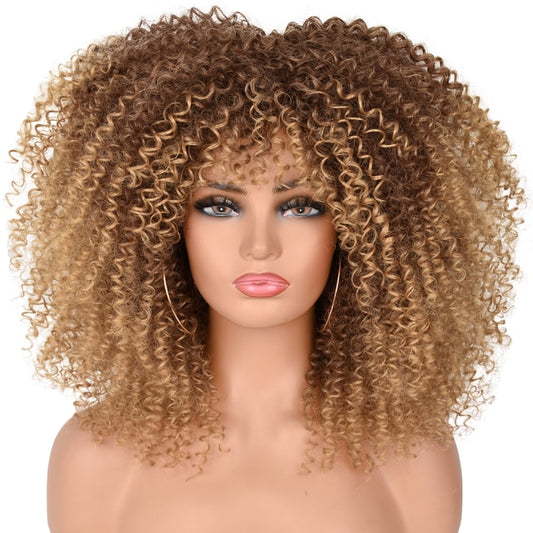
A well-constructed lace front or full lace wig with pre-plucked knots and a natural hairline already built in gives you a significant head start. Pre-plucked wigs have the density at the hairline already reduced to mimic a natural growth pattern, which means less work on your end to achieve a seamless finish.
For help choosing the right wig for a natural hairline, read: How to Choose Your First Human Hair Wig for Drag. For the best options across all categories, read: Best Human Hair Wigs for Drag Queens (2026 Guide).
Caring for Your Lace
The lace is the most delicate part of your wig. Handle it carefully during installation and removal, and clean adhesive residue promptly after every wear. For the complete care routine, read: The Ultimate Drag Wig Care Routine
Shop Human Hair Wigs for Drag
Browse our collection of human hair wigs for drag — HD lace, pre-plucked hairlines, and constructions designed to give you the most natural finish possible, right out of the box.