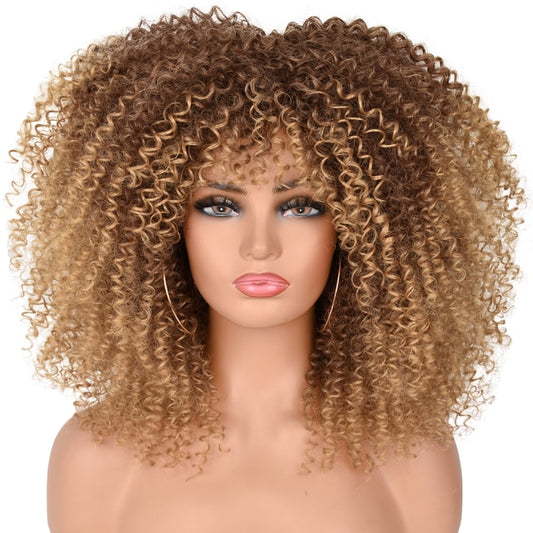

One of the most common questions from queens investing in their first human hair wig: how long will it actually last? The honest answer is that it depends — on how often you wear it, how you care for it, and how you store it. This guide breaks down realistic lifespan expectations and exactly what you can do to maximize every wig in your collection.
For the complete foundation guide to human hair wigs, start here: The Ultimate Guide to Human Hair Wigs for Drag Queens
The Realistic Lifespan: 1–3 Years
A human hair drag wig that is properly maintained lasts one to three years with regular performance use. That's the honest range. Queens who perform multiple times a week and care for their wigs diligently can expect one to two years. Queens who perform less frequently and follow a rigorous care routine can get two to three years or more from a single wig.
For comparison, a synthetic wig typically lasts three to six months with regular use. The higher upfront cost of human hair pays for itself in longevity — a $200 human hair wig that lasts two years costs less per wear than a $50 synthetic that needs replacing every few months.
What Shortens a Wig's Lifespan
Heat damage is the most common cause of premature wig degradation. Using heat tools without heat protectant, using temperatures above 400°F, or heat styling too frequently all damage the hair cuticle and cause dryness, frizz, and breakage that can't be reversed. For safe heat styling, read: How to Style a Human Hair Drag Wig with Heat Tools
Poor washing habits accelerate wear significantly. Using sulfate shampoo, washing with hot water, scrubbing in circular motions, and skipping conditioner all damage the hair over time. For the correct washing technique, read: How to Wash a Human Hair Drag Wig Without Ruining It
Improper storage causes tangling, cap distortion, and UV damage that shortens lifespan. A wig stored flat, in a bag, or in direct sunlight degrades faster than one stored correctly on a stand. For the complete storage guide, read: How to Store Your Human Hair Drag Wig Between Performances
Adhesive damage to the lace is cumulative. Every application and removal cycle stresses the lace and knots. Queens who perform frequently and use adhesive every time will see lace degradation faster than those who use glueless methods. For glueless alternatives, read: How to Secure a Drag Wig Without Glue
Chemical processing — bleaching, dyeing, or perming — reduces the hair's structural integrity and shortens lifespan. The more processing a wig undergoes, the shorter its usable life. For coloring guidance, read: Can You Dye a Human Hair Drag Wig?
What Extends a Wig's Lifespan
A consistent care routine is the single biggest factor in wig longevity. Queens who follow a daily, weekly, and monthly care routine consistently get significantly more life from their wigs than those who care for them sporadically. For the complete routine, read: The Ultimate Drag Wig Care Routine
Rotating your collection extends the life of every piece. A wig worn twice a week degrades twice as fast as one worn once a week. Building a wardrobe of multiple wigs and rotating between them is one of the most effective strategies for extending individual wig lifespan. For wardrobe building guidance, read: How to Build a Drag Wig Wardrobe: A Queen's Guide to Collecting Smart
Glueless installation eliminates adhesive wear on the lace entirely. For queens who perform frequently, switching to glueless methods can meaningfully extend lace lifespan. Read: How to Secure a Drag Wig Without Glue
Proper travel care prevents the compression, tangling, and damage that comes from careless packing. For the complete travel guide, read: Wig Packing Checklist for Traveling Drag Performers
Signs It's Time to Retire a Wig
Even with perfect care, every wig eventually reaches the end of its useful life. Signs it's time to retire a piece: excessive shedding that doesn't improve with conditioning, lace that's too damaged or thinned to lay flat, hair that's lost its elasticity and breaks easily with minimal manipulation, or a texture that's become permanently frizzy and doesn't respond to conditioning or styling.
When a wig reaches this point, retire it gracefully. Trying to extend the life of a wig that's past its prime means performing with a look that doesn't represent your best work.
Lifespan by Wig Type
Density affects lifespan — higher density wigs have more hair, which means more wear before thinning becomes visible. For density guidance, read: What Wig Density Looks Best for Drag Makeup? Texture also matters — straight textures show wear (frizz, dryness) more visibly than curly textures, which can look intentional even as the hair ages. For texture guidance, read: The Best Wig Textures for Drag
Shop Human Hair Wigs for Drag
Every wig in our collection is built for the demands of real drag performance — the right construction, the right lace, the right density to give you the longest possible lifespan with proper care. Browse the full collection: Human Hair Wigs for Drag Queens →