
Written by The Drag Queen Store editorial team, performers and wig specialists who stock, wear and style this hair. Reviewed September 2026.
Two wigs can share the same hair and behave completely differently, because the cap is what decides how real the hairline looks, where you can part, and how much you sweat under the lights. Here's what lace front, full lace and monofilament actually give you.
Quick comparison
| Lace front | Full lace | Monofilament | |
|---|---|---|---|
| Lace placement | Front hairline only | Entire cap | Sheer mesh at the crown or part |
| Hairline realism | Excellent at the front | Excellent all around | Depends on the front construction |
| Parting freedom | Front parting only | Anywhere, including updos and ponytails | Natural movement across the mono area |
| Breathability | Good | Best | Good at the crown |
| Install effort | Moderate, glue or glueless | Highest, most skill required | Low to moderate |
| Price | Mid | Highest | Mid to high |
| Best for | Most drag looks, hair down or half up | Updos, ponytails, close-up and camera | Scalp realism and comfort at the part |
Lace front: the workhorse
Sheer lace across the front hairline, machine wefts behind it. You get a hairline that melts, at a price that makes sense, with a cap sturdy enough for real nights out. The trade: you part at the front, and you do not flip it into a high ponytail without exposing the back construction.
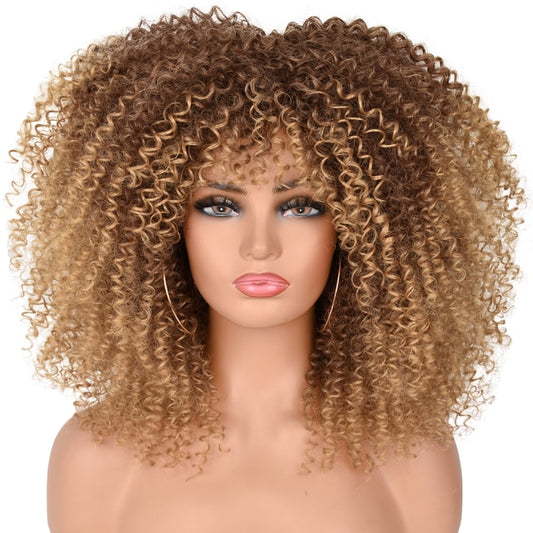
Lace fronts to try: Ice Queen Platinum Blonde Lace Front Wig and the 24-Inch Kinky Curly Synthetic Lace Front Wig.
How wide is your lace? 4x4, 7x5, 13x4, 13x6
Those numbers are the lace panel in inches, and they decide how far your parting can travel.
- 4x4 closure: a middle or slightly off-center part. Simple and secure. See the "Chocolate Fantasy" Body Wave Wear & Go Wig.
- 7x5 glueless: pre-cut, pre-plucked, wear straight out of the box. See "Bone to Be Bad" Bone Straight Bob.
- 13x4 frontal: ear-to-ear hairline, deep side parts on the table.
- 13x6 frontal: the deepest parting and most dramatic swoops. See "Lace So Wide, It's a Lifestyle", or choose your own width with "Pick Your Coverage".
HD lace is not a size, it is a finer, thinner lace that disappears against more skin tones. Pre-bleached knots and pre-plucked hairlines save you an hour of prep.
Full lace: total freedom, total commitment
The whole cap is lace, so hair can be parted anywhere and pulled into a high pony or an updo with the hairline still reading real from every angle. It is the most breathable option under stage lights and the most convincing on camera. It is also the priciest and the most delicate, and it asks for the best install skills you have.
Monofilament: the scalp illusion
A fine, sheer mesh at the crown or part with hairs hand-tied individually, so each strand moves separately and the part looks like it grows from skin. Monofilament is about scalp realism and comfort rather than hairline melt, so it is often paired with a lace front. Worth it if you wear a visible part, perform under harsh lighting, or want something gentler against a sensitive scalp.
And capless?
Open wefts, no lace, maximum airflow and the lowest price. No hairline illusion, so it lives under bangs, hats, scarves and big fantasy silhouettes. For a no-glue, no-lace option with a built-in fringe, look at "Bangs & Served".
Which cap should you buy?
- First real wig, hair worn down: lace front, 4x4 or 7x5 glueless.
- Deep side parts and dramatic swoops: 13x6 HD frontal.
- Ponytails, updos, 360-degree camera work: full lace.
- Visible part, long sweaty sets, sensitive scalp: monofilament.
- Bangs, hats, fantasy shapes, budget back-ups: capless.
Whatever the cap, nothing slays if it slides. Secure it with the Secure the Slay Silicone Wig Grip Band.
Need the vocabulary? Start with the Drag Wig Glossary.
Still deciding on the hair itself? Read Synthetic vs Human Hair Drag Wigs: Which Should You Buy?